- Call: +91-8904100674
- Email: support@quickcurd.com

Instructor: Vinay Kumar
What you'll achieve
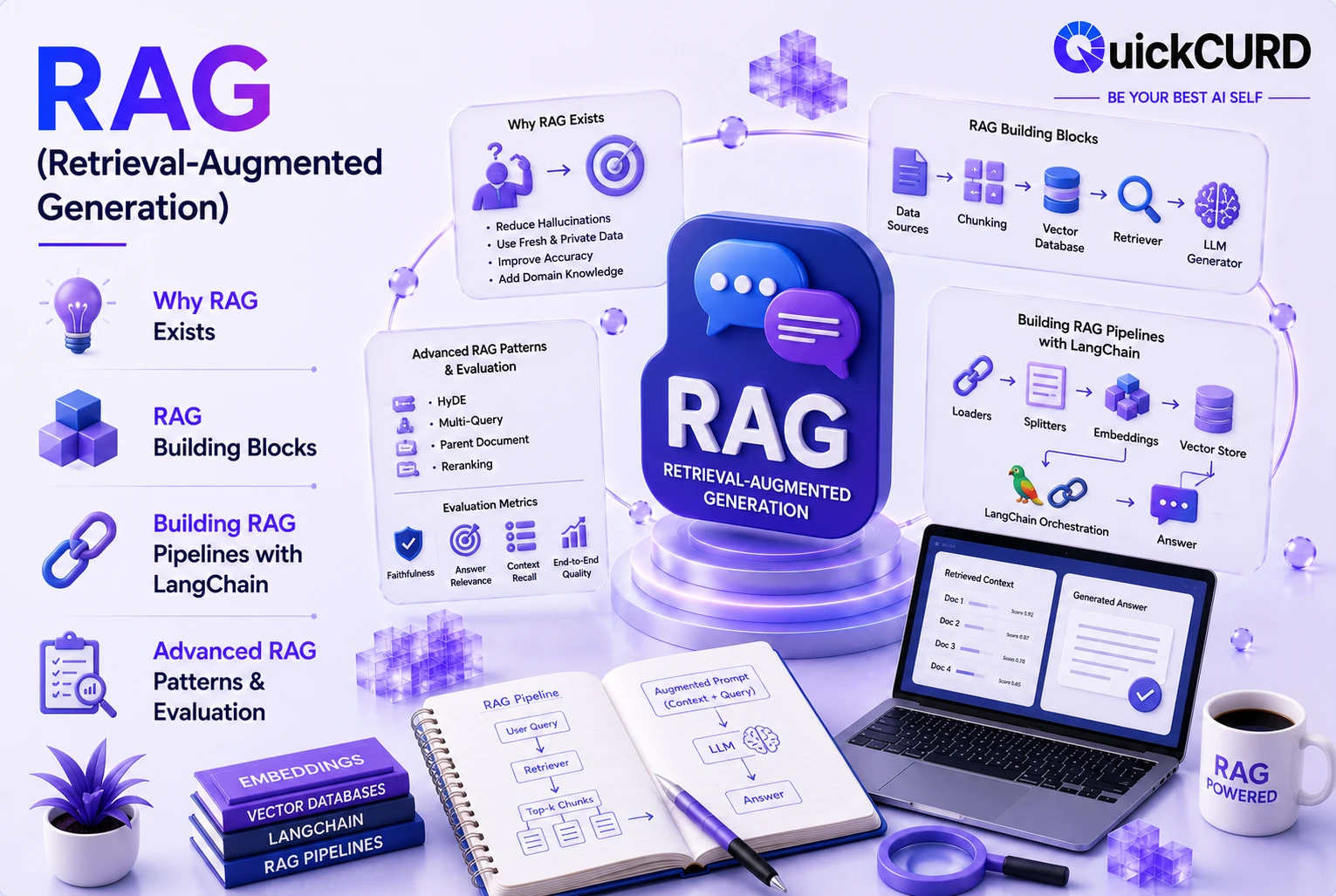
Understand why RAG solves hallucination and knowledge-cutoff problems, build complete RAG pipelines with embeddings and vector stores, and implement advanced retrieval patterns.
The problem RAG solves
• LLM knowledge cutoff and hallucination problems
• Parametric vs non-parametric retrieval
• RAG vs fine-tuning vs prompt stuffing
• Architecture: retrieve → augment → generate
• Use cases: document Q&A, enterprise search
Embeddings, chunking, vector stores
• Chunking: fixed, semantic, recursive strategies
• Embedding models: OpenAI, sentence-transformers
• Vector DBs: FAISS, Pinecone, Chroma, Weaviate
• Cosine similarity, ANN, metadata filtering
End-to-end implementation
• Document loaders: PDF, web, CSV, Notion
• RetrievalQA and Conversational Retrieval Chain
• Contextual compression and re-ranking
• Practical: company knowledge-base chatbot
Production-grade retrieval
• HyDE: Hypothetical Document Embeddings
• Multi-query retrieval for broader coverage
• Multimodal & Vectorless RAG
• RAG evaluation with RAGAS: faithfulness, relevance
1. RAG makes LLMs knowledgeable about private data instantly
2. Chunking strategy has more impact than model choice
3. Vector databases are the new SQL for semantic search, Vectorless RAG is latest in the stack
4. Always evaluate RAG — hallucination reduces, not disappears
0 Reviews

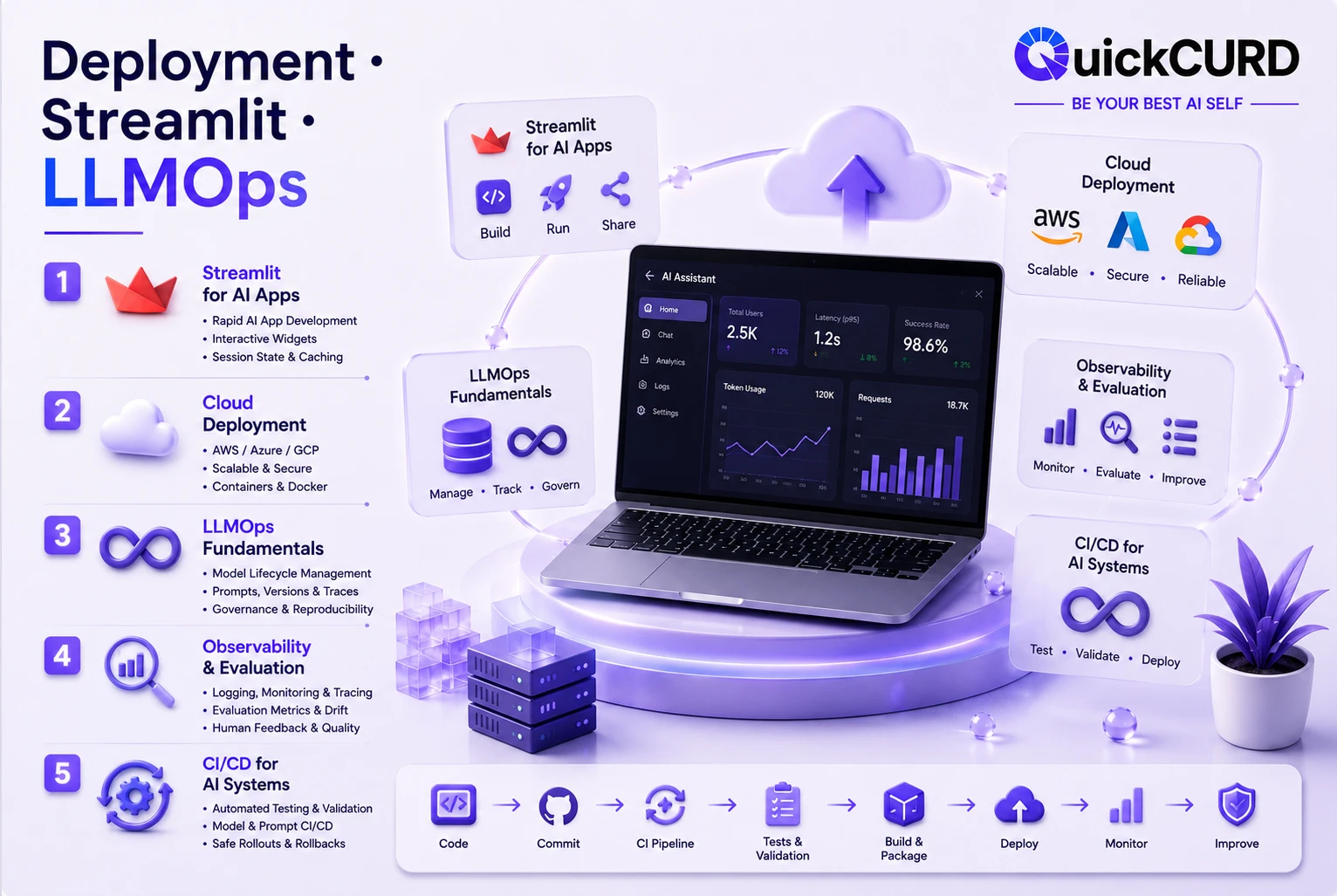
Package AI apps into Streamlit UIs, deploy on public cloud (AWS/GCP), implement LLMOps monitoring with LangSmith, establish CI/CD for AI, and understand LLMOps as a discipline.
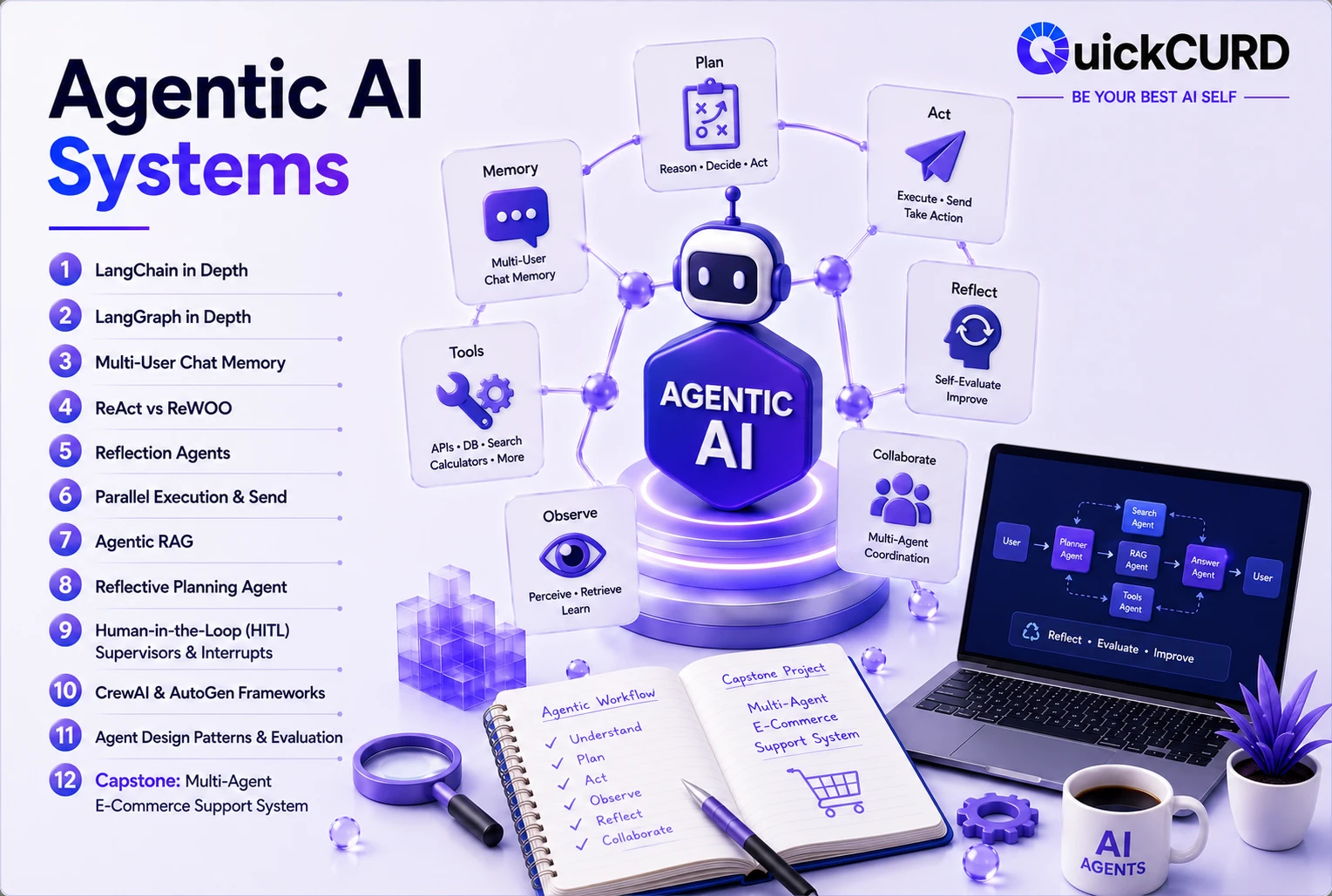
Build AI agents from first principles, design stateful LangGraph workflows, implement all major agent patterns compare CrewAI vs AutoGen, and ship a production multi-agent e-commerce support system.
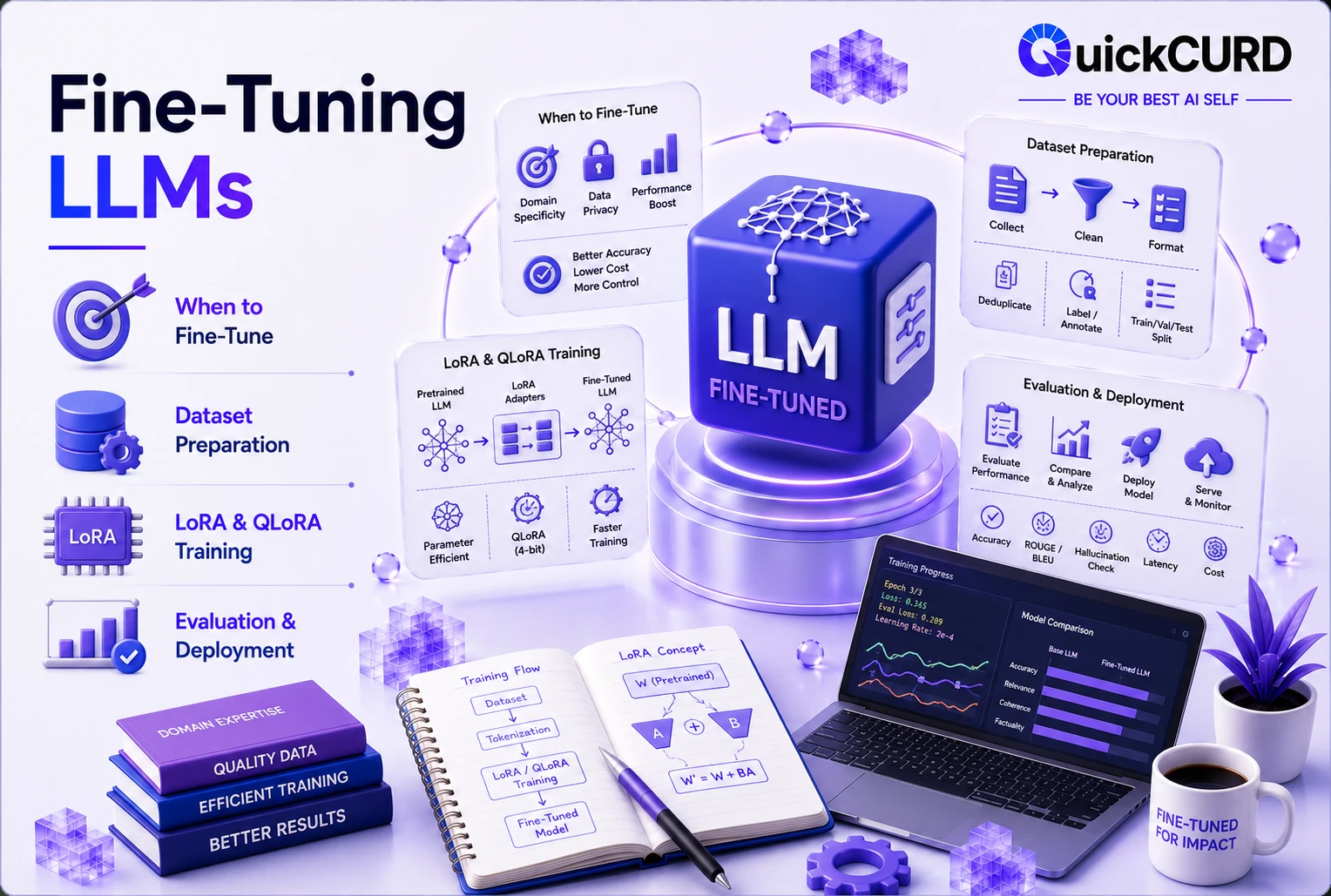
Decide when fine-tuning beats prompting and RAG, implement LoRA/QLoRA, prepare high-quality datasets, evaluate models, and deploy fine-tuned adapters to production.