- Call: +91-8904100674
- Email: support@quickcurd.com

Instructor: Vinay Kumar
What you'll achieve
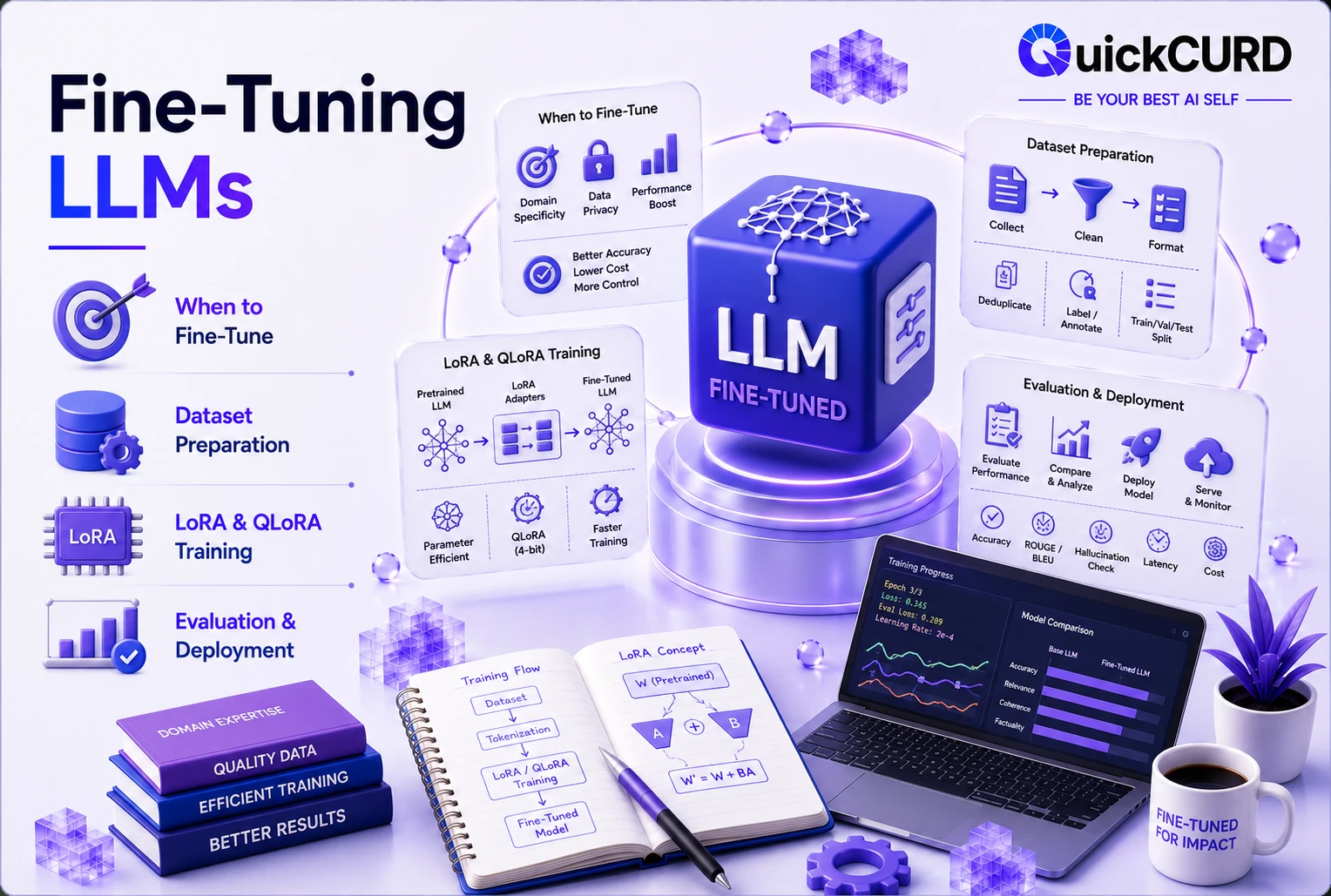
Decide when fine-tuning beats prompting and RAG, implement LoRA/QLoRA, prepare high-quality datasets, evaluate models, and deploy fine-tuned adapters to production.
Decision matrix and fundamentals
• Prompting vs RAG vs Fine-tuning decision matrix
• Full fine-tuning vs PEFT
• Use cases: tone, style, domain knowledge, format
• Catastrophic forgetting and mitigation
The foundation of fine-tuning quality
• Instruction-following format: JSONL
• System prompt + user + assistant turn structure
• Data quality over quantity — curation principles
• Synthetic data generation with LLMs
Parameter-efficient fine-tuning
• LoRA: Low-Rank Adaptation explained intuitively
• QLoRA: 4-bit quantisation + LoRA on consumer GPU
• HuggingFace PEFT library setup
• Practical: fine-tune Mistral-7B on custom Q&A
From experiment to production
• Perplexity, BLEU, ROUGE, LLM-as-judge
• Merging LoRA adapters with base model
• Serving: vLLM, Ollama, HuggingFace Inference
• Monitoring and continual fine-tuning
1. Fine-tuning is not always the answer — try prompting first
2. QLoRA makes fine-tuning accessible on consumer hardware
3. Dataset quality is the biggest lever in fine-tuning outcomes
4. Always benchmark against the base model to check for regression
0 Reviews

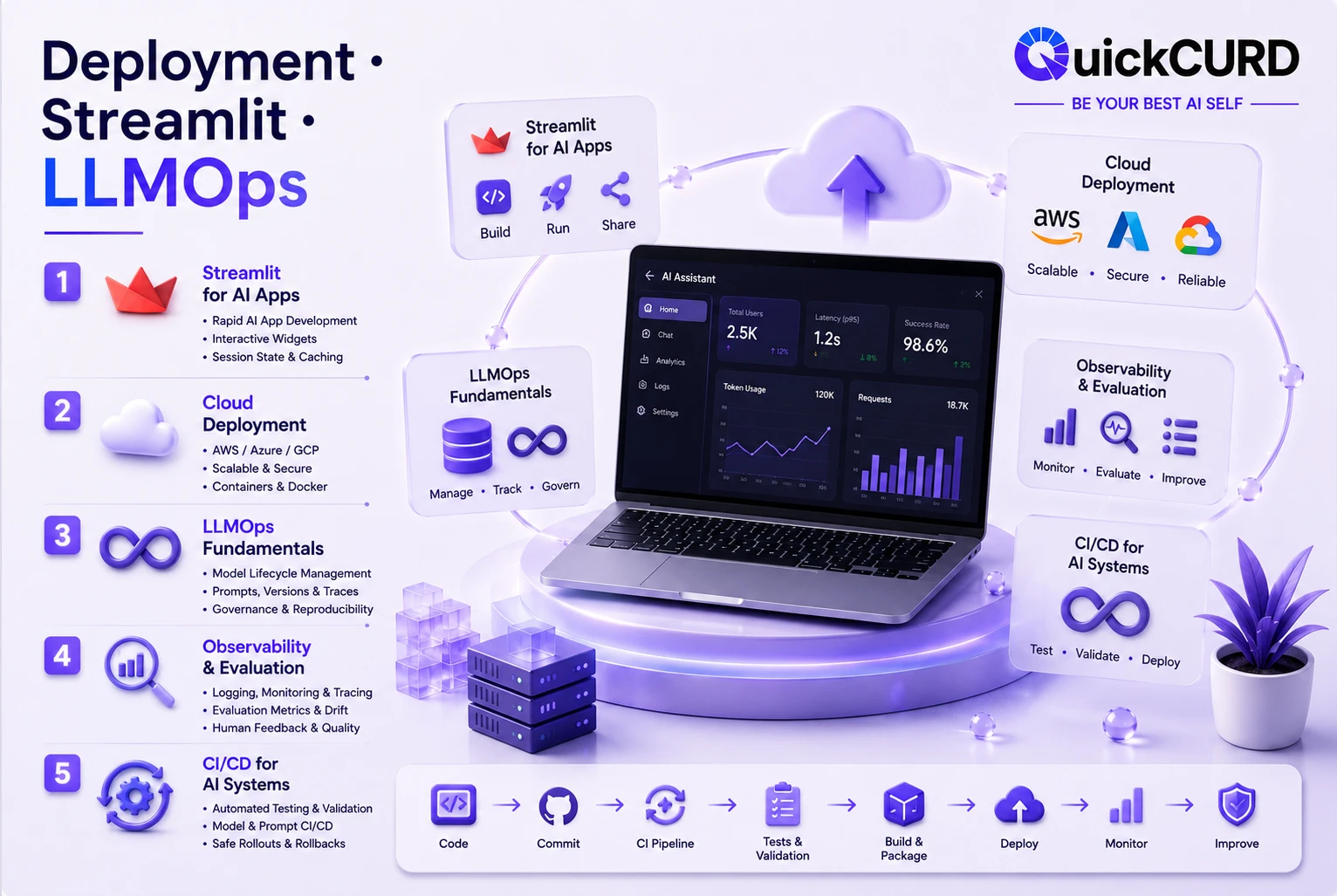
Package AI apps into Streamlit UIs, deploy on public cloud (AWS/GCP), implement LLMOps monitoring with LangSmith, establish CI/CD for AI, and understand LLMOps as a discipline.
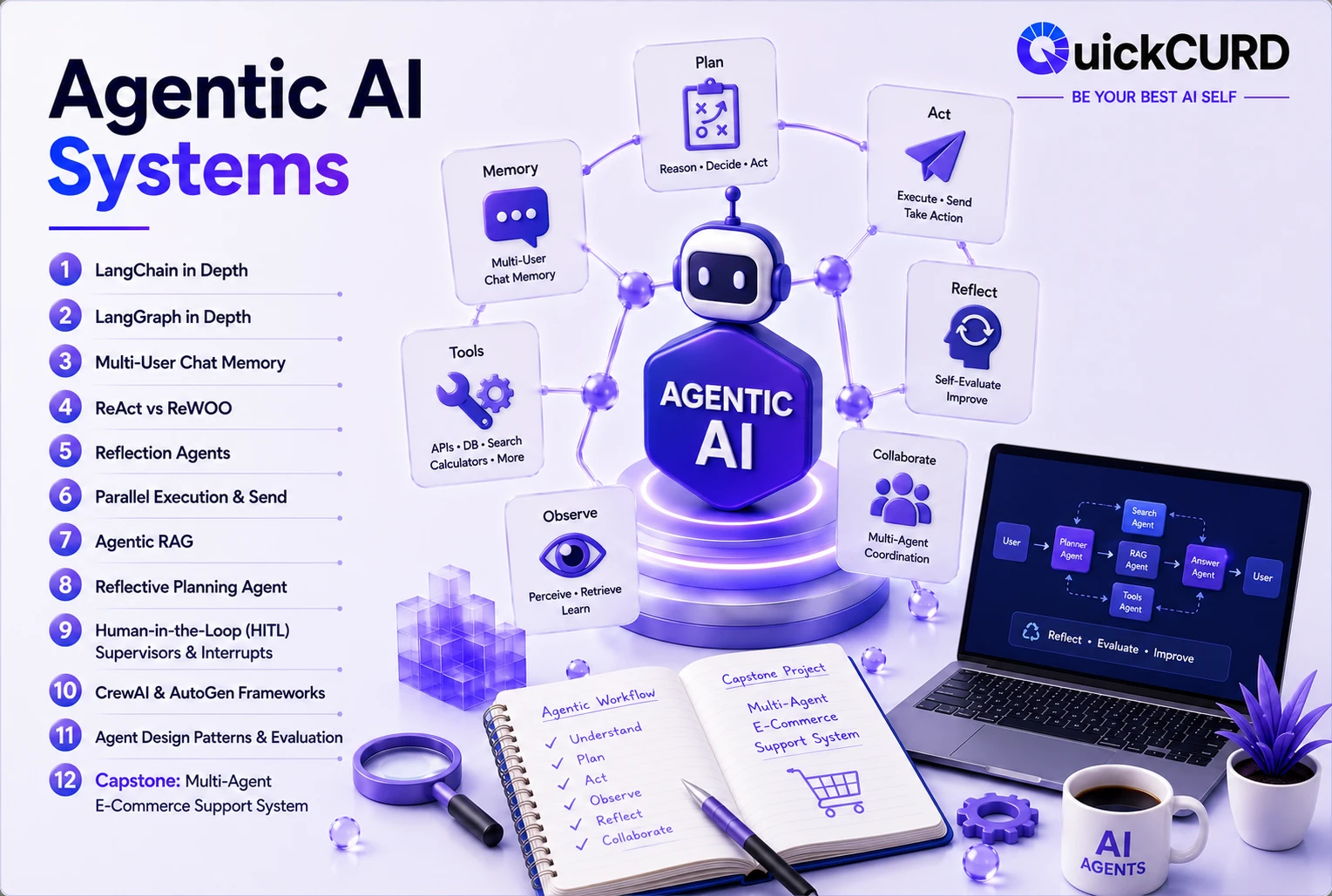
Build AI agents from first principles, design stateful LangGraph workflows, implement all major agent patterns compare CrewAI vs AutoGen, and ship a production multi-agent e-commerce support system.
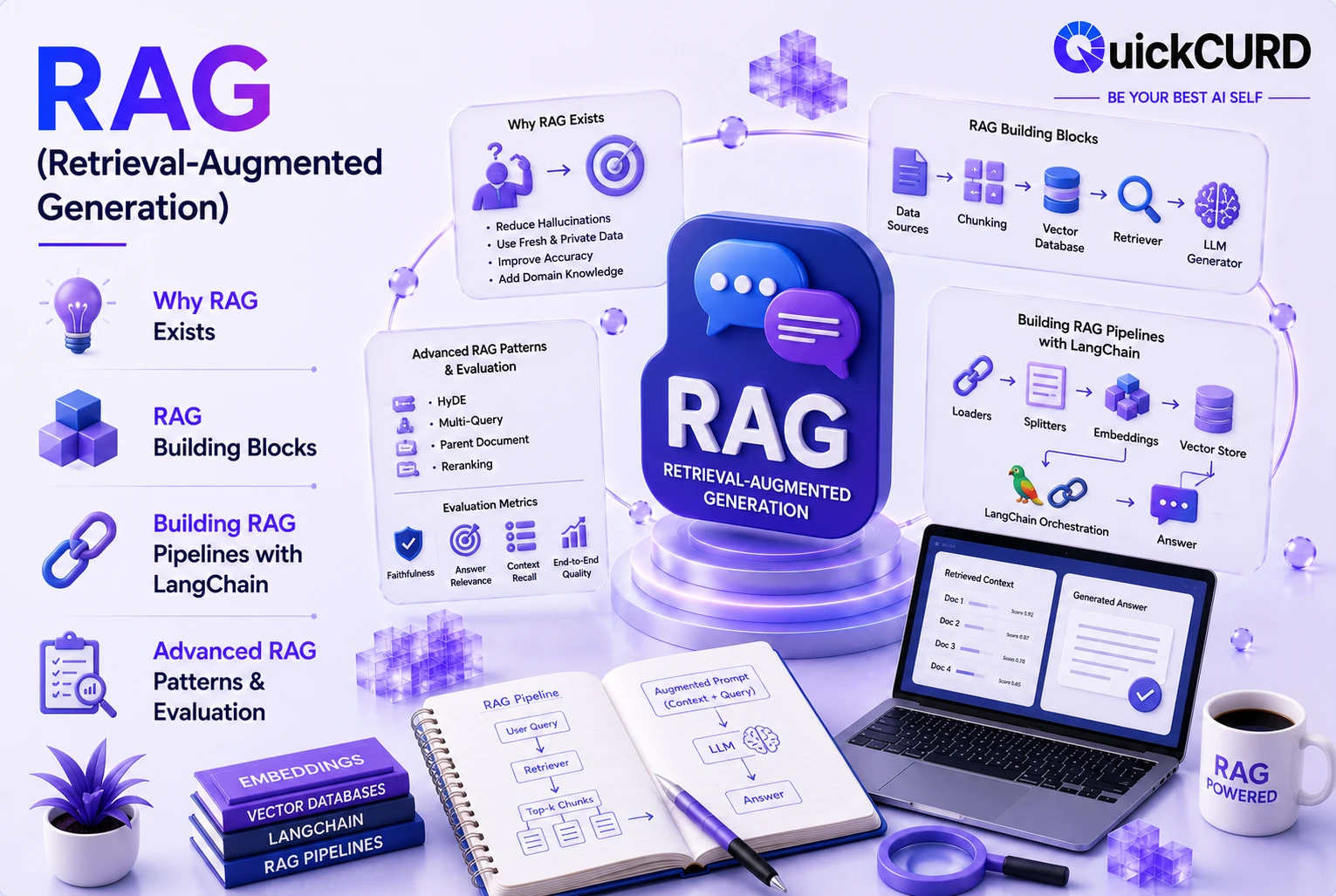
Understand why RAG solves hallucination and knowledge-cutoff problems, build complete RAG pipelines with embeddings and vector stores, and implement advanced retrieval patterns.