- Call: +91-8904100674
- Email: support@quickcurd.com
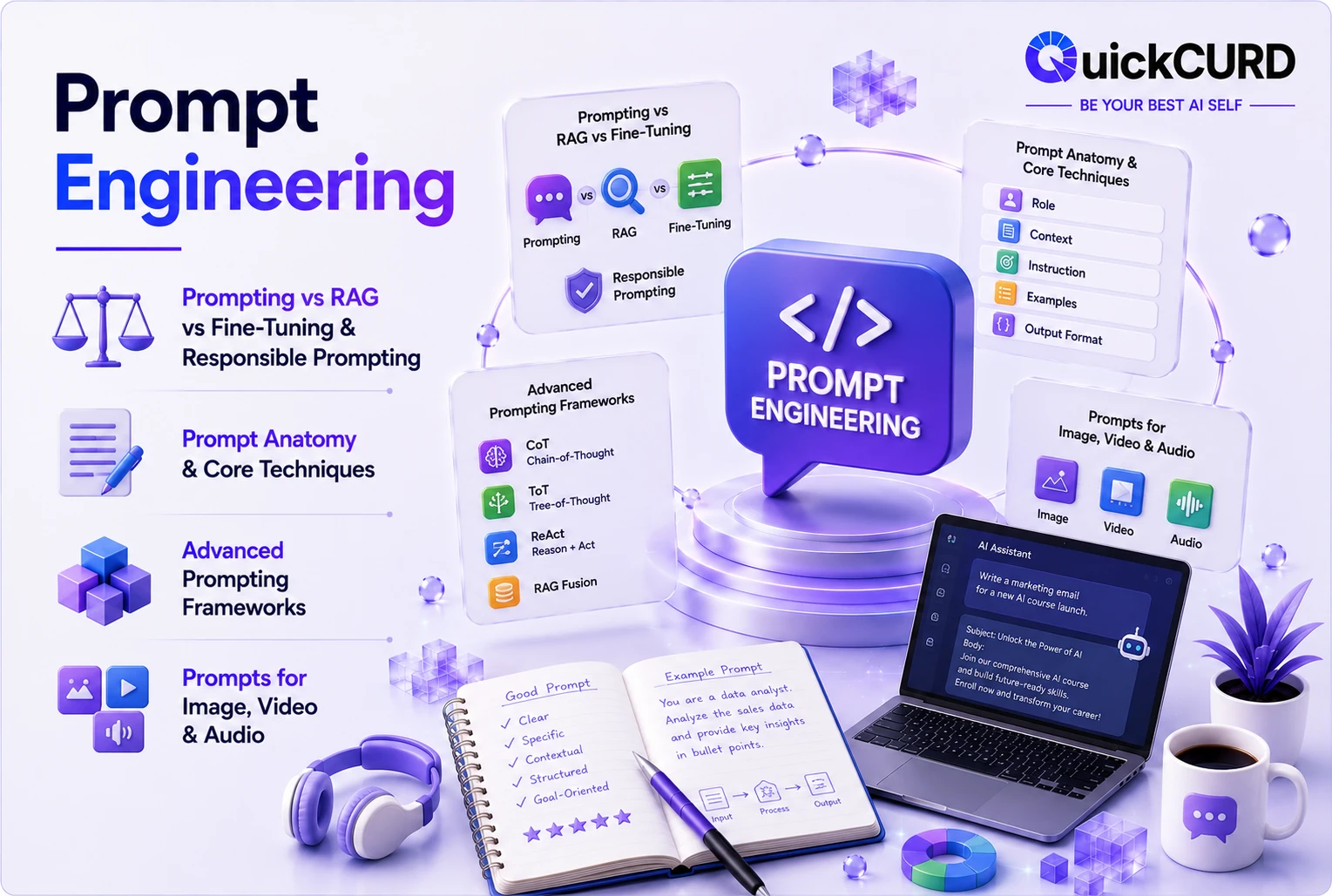

Instructor: Vinay Kumar
What you'll achieve
Build a systematic approach to prompting, master all major frameworks from zero-shot to chain-of-thought, decide when to prompt vs RAG vs fine-tune, and build reusable prompt libraries.
Choosing the right approach
• When prompting alone is sufficient
• When RAG is needed: knowledge and recency gaps
• When fine-tuning justifies the cost
• Latency, cost, accuracy tradeoffs
• Description, Delegation, Diligence (Responsible: Bias, AI Usage Disclaimers, Discernment (Evaluations))
Building blocks of great prompts
• Role, context, instruction, format, constraints
• Zero-shot, one-shot, few-shot prompting
• Chain-of-Thought (CoT): step-by-step reasoning
• Tree-of-Thought and self-consistency
• Output format control: JSON, markdown, tables
Systematic professional approaches
• RISEN: Role, Instructions, Steps, End-goal, Narrowing
• CARE: Context, Action, Result, Example
• ReAct prompting pattern
• Meta-prompting: AI refines its own prompts
Create Across Modalities
• Domain applications: Sales, HR, Marketing, Legal, Finance
• Create images like a pro
• Video generation and Avatar Generation using tools
• Music Generation using GenAI
1. Same task phrased differently gives wildly different results
2. Few-shot examples are the fastest quality improvement
3. Chain-of-Thought unlocks reasoning zero-shot cannot access
4. A prompt library is the highest-ROI AI investment for teams
0 Reviews

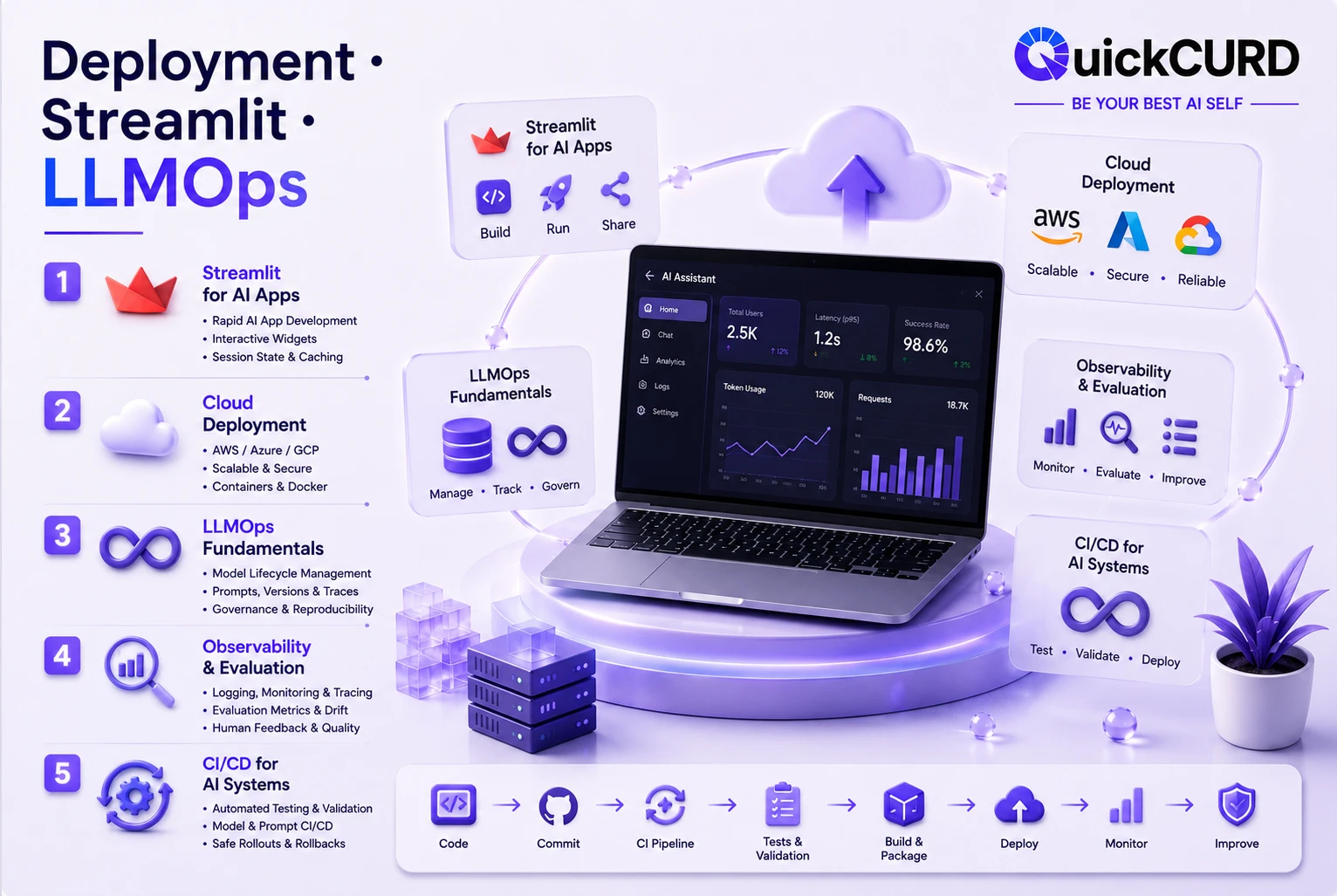
Package AI apps into Streamlit UIs, deploy on public cloud (AWS/GCP), implement LLMOps monitoring with LangSmith, establish CI/CD for AI, and understand LLMOps as a discipline.

Build AI agents from first principles, design stateful LangGraph workflows, implement all major agent patterns compare CrewAI vs AutoGen, and ship a production multi-agent e-commerce support system.
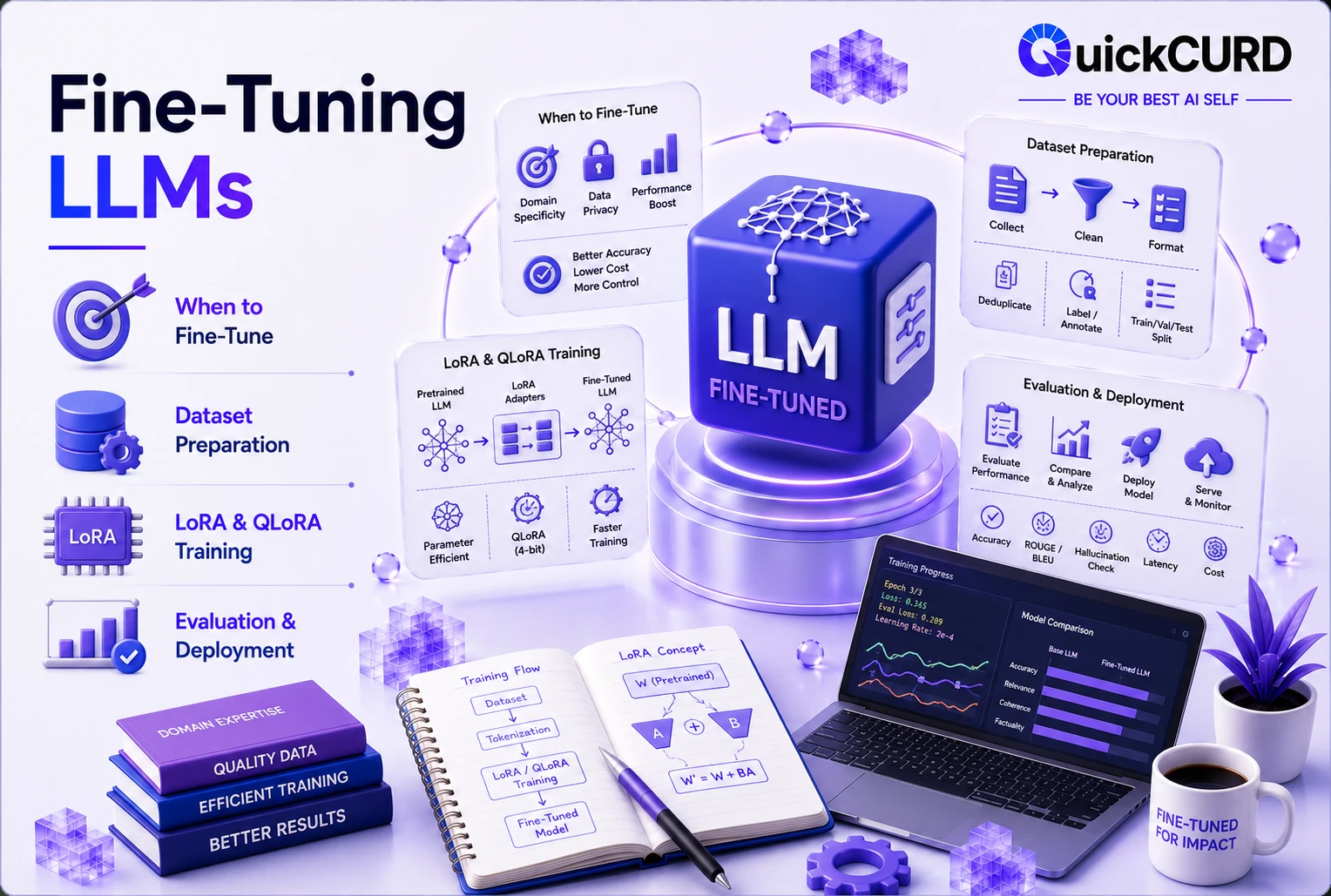
Decide when fine-tuning beats prompting and RAG, implement LoRA/QLoRA, prepare high-quality datasets, evaluate models, and deploy fine-tuned adapters to production.