- Call: +91-8904100674
- Email: support@quickcurd.com

Instructor: Vinay Kumar
What you'll achieve
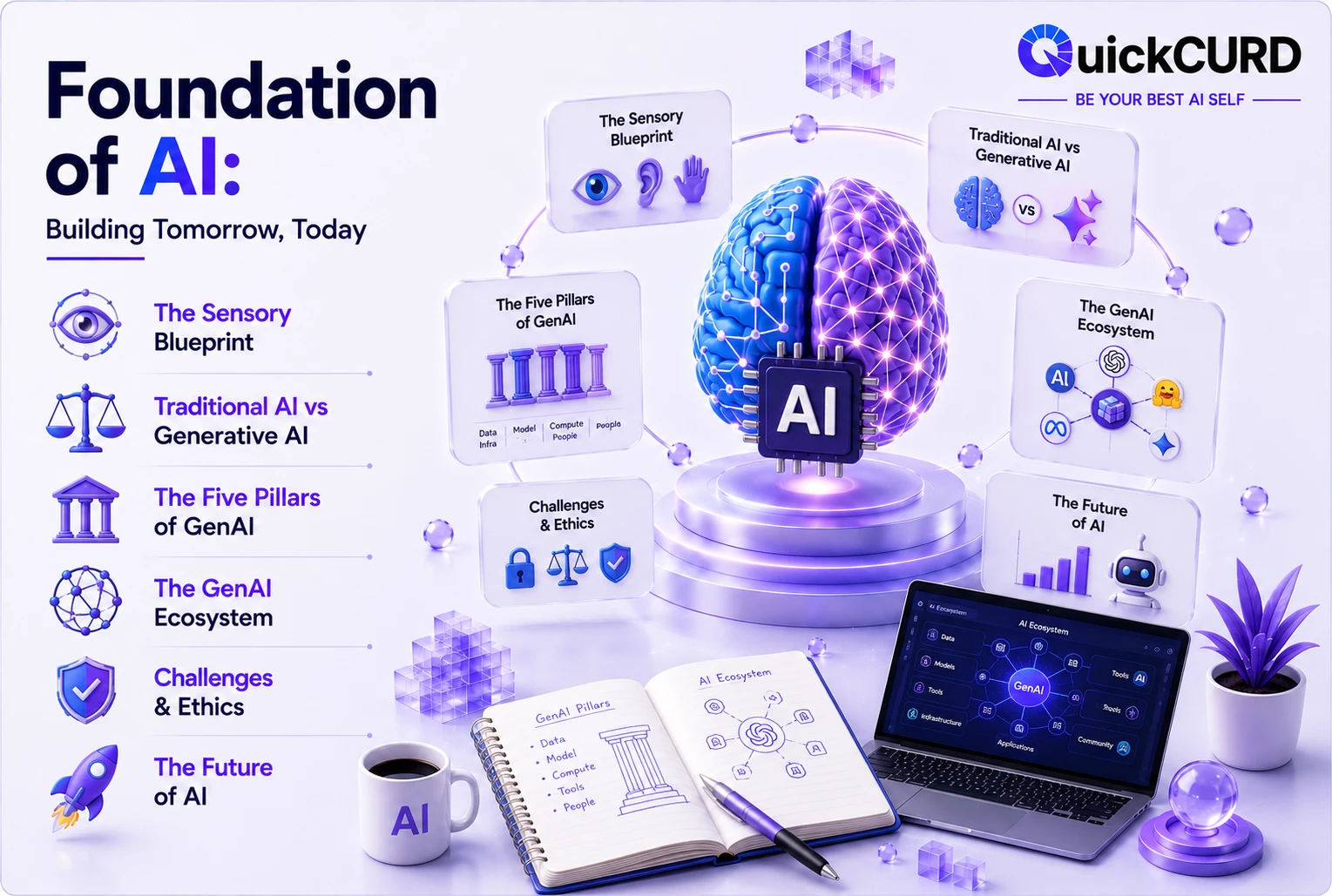
Map Human Intelligence to Artificial Intelligence, distinguish traditional (Discriminative) AI from Generative AI, master the five pillars of GenAI, navigate the tool ecosystem, and evaluate ethical implications through real-world case studies.
Mapping human senses to AI systems
• Ears → Speech Recognition / Audio AI
• Eyes → Computer Vision & object detection
• Skin → IoT sensors, pressure & temperature
• Mouth → NLP & Speech Synthesis
• Case study: Osmo.ai & smell intelligence
The evolution from analysis to creation
• Supervised learning: Spam filters, price prediction
• Unsupervised: Customer segmentation
• GenAI creates new content vs classifying
• Decision framework: when to use which
Core frameworks powering modern AI
• Prompt Engineering: Instruction design
• RAG: Real-time private data connection
• Fine-Tuning: Domain-specific customization
• Agents: AI with tools and reasoning
• Agentic AI: Autonomous multi-agent workflows
Tools, modalities, and cost overview
• Text: ChatGPT, Claude, Gemini, Copilot
• Image: Midjourney, Image Model
• Video: Sora, Gemini, Flow
• Code: GitHub Copilot, Cursor
• Case study: Social media campaign ROI
Risks, pitfalls, and Responsible use
• Hallucinations: AI presenting falsehoods confidently
• Bias embedded in training data
• Privacy risks with public models
• Overreliance and skill degradation
Physical AI, robotics, and what's next
• Physical AI: Robots as sensory amalgamations
• Multimodal AI: Text + Image + Audio
• Autonomous agents at scale
• Emerging AI regulation landscape
1. GenAI shifts AI from understanding data to creating it
2. Intelligence = Perception + Reasoning + Action
3. Traditional AI classifies; Generative AI creates
4. Context is the foundation of good prompting and RAG
5. The 5 pillars define enterprise AI adoption architecture
0 Reviews

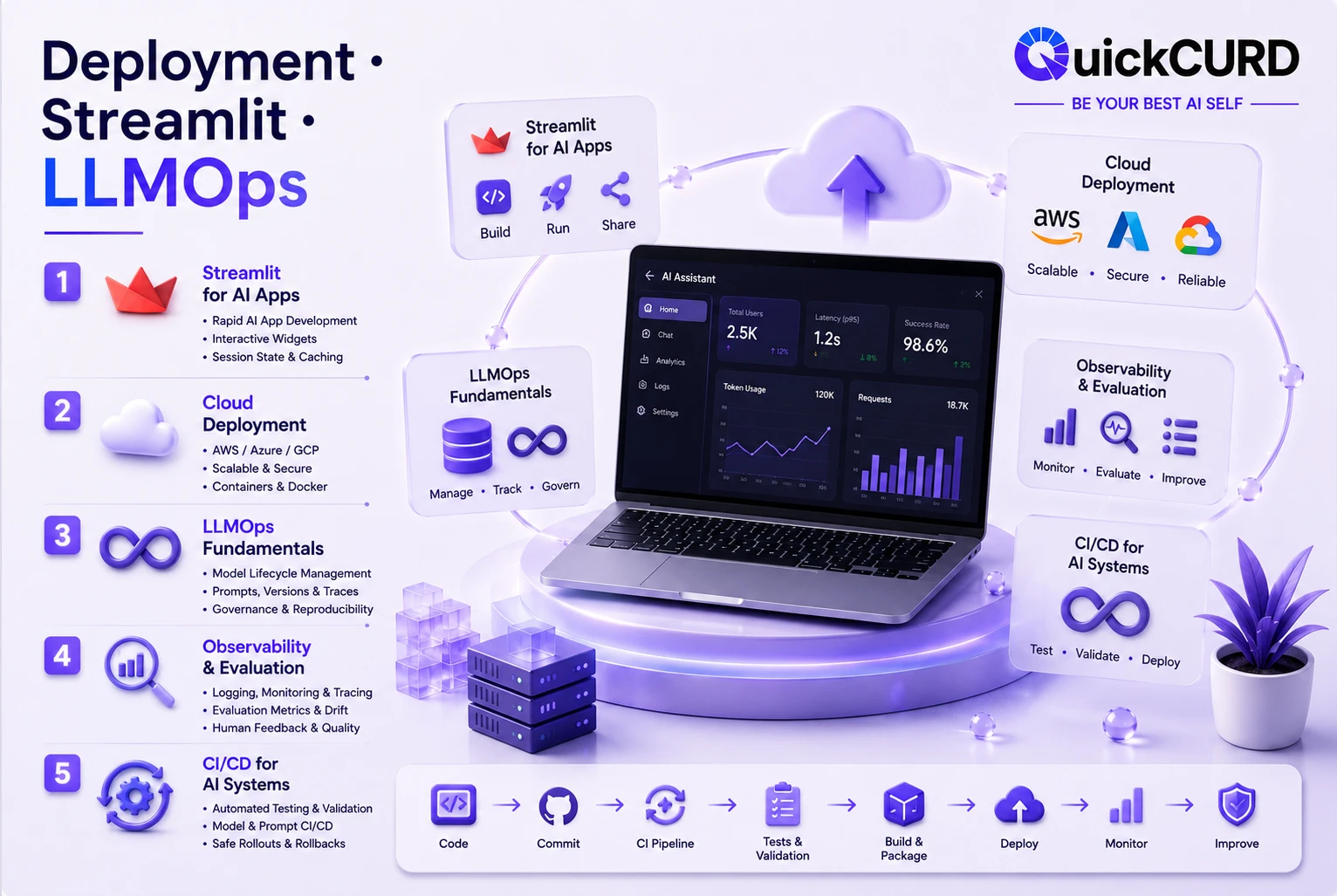
Package AI apps into Streamlit UIs, deploy on public cloud (AWS/GCP), implement LLMOps monitoring with LangSmith, establish CI/CD for AI, and understand LLMOps as a discipline.
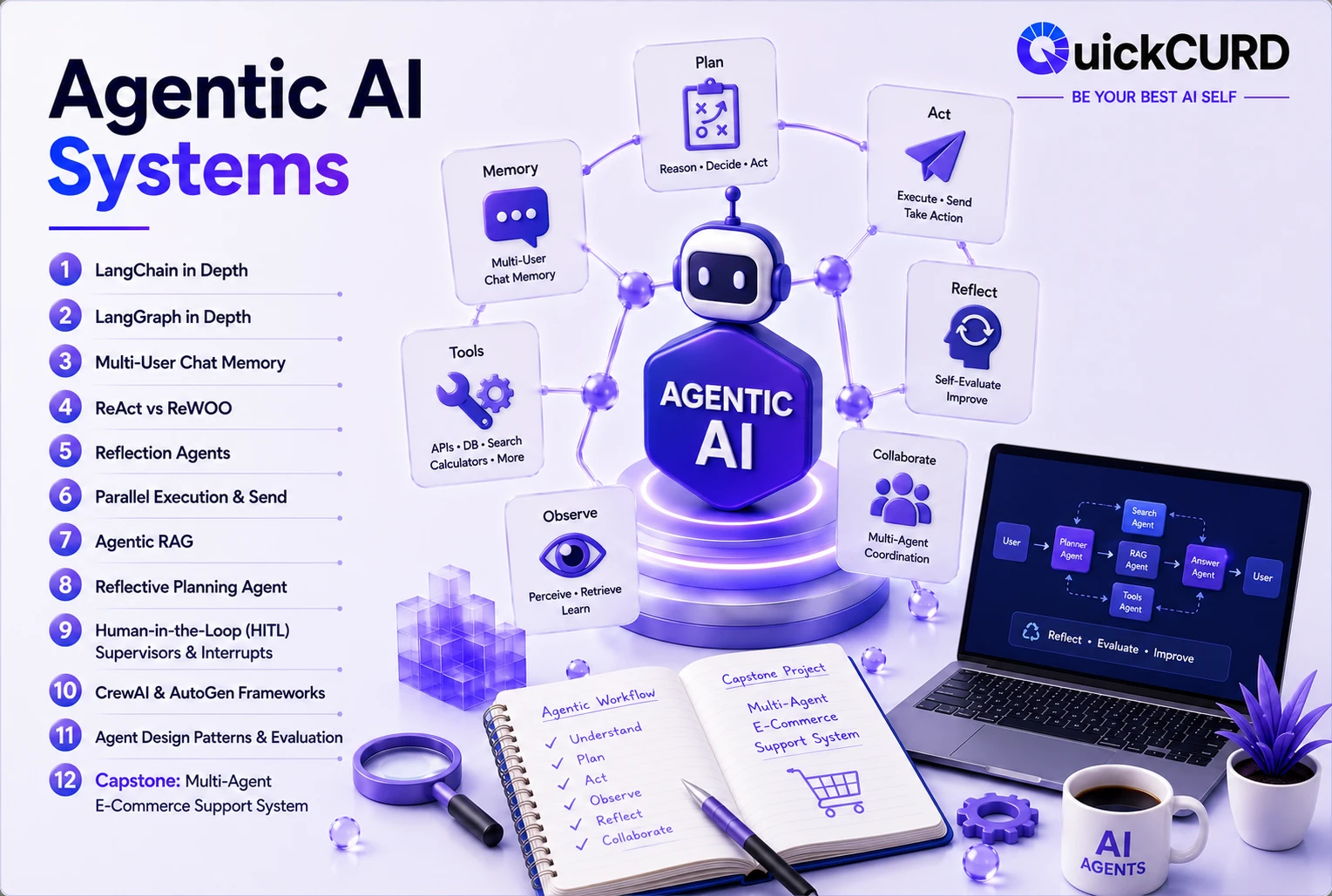
Build AI agents from first principles, design stateful LangGraph workflows, implement all major agent patterns compare CrewAI vs AutoGen, and ship a production multi-agent e-commerce support system.
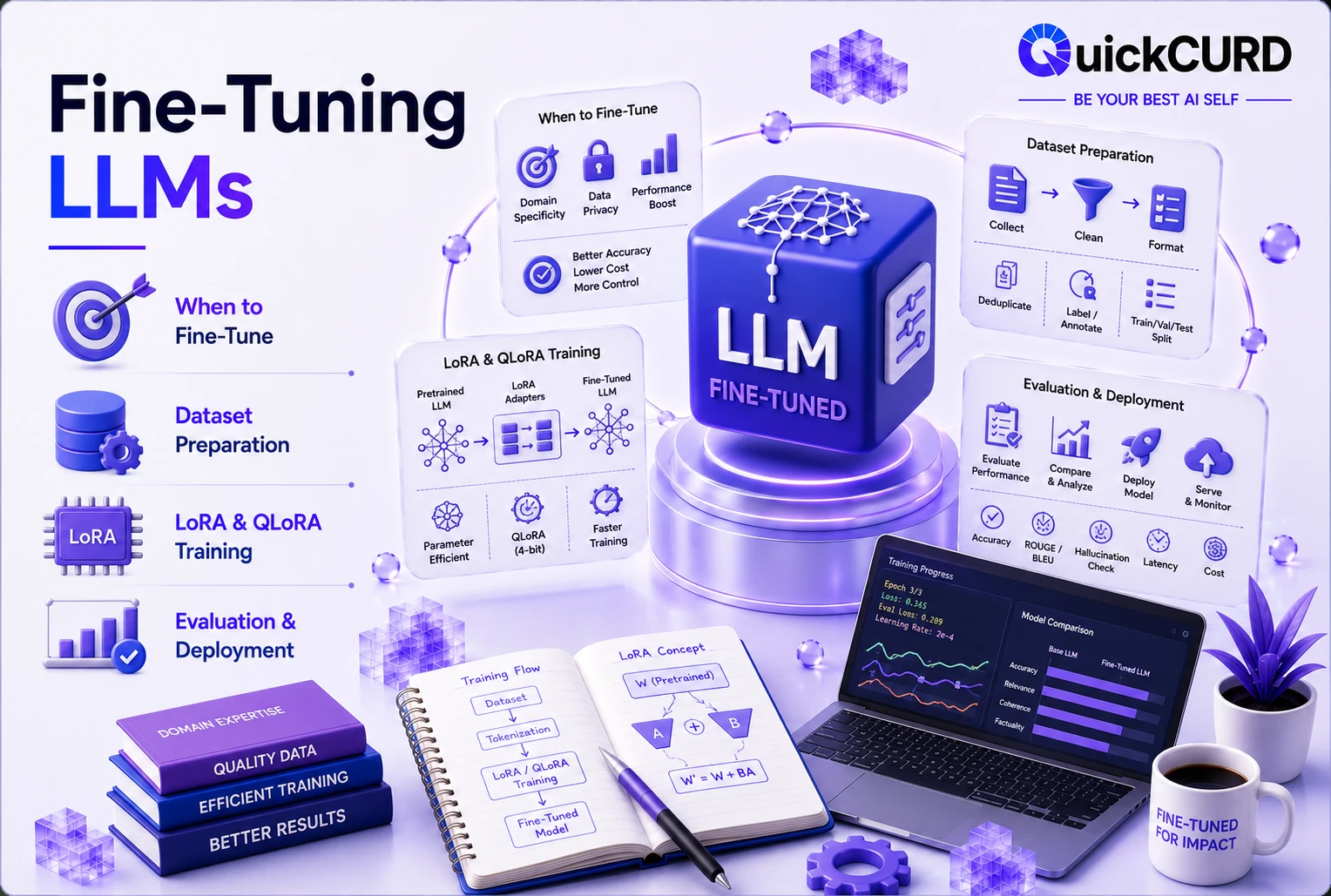
Decide when fine-tuning beats prompting and RAG, implement LoRA/QLoRA, prepare high-quality datasets, evaluate models, and deploy fine-tuned adapters to production.